Counting Game - Roll a Die and Color: A Practical Tool for Early Numeracy Development
Introducing the Counting Game - Roll a Die and Color, a simple yet effective educational activity designed to help children learn how to count from one to six through hands-on play. This no-prep printable game provides a tactile and visual learning experience, making it ideal for educators, parents, and caregivers who want to reinforce basic numeracy skills without relying on digital screens or complex materials. Whether you're preparing a classroom activity, planning a homeschooling session, or organizing a child-friendly event, this die-rolling game offers a flexible and engaging way to incorporate math learning into daily routines.
How the Counting Game - Roll a Die and Color Works
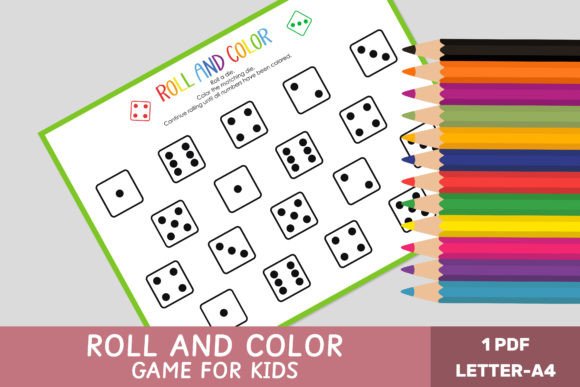
The concept is straightforward: children roll a six-sided die and then color in the corresponding number on a printed game sheet. Each sheet features numbered sections from one to six, and the goal is to roll each number multiple times, reinforcing number recognition and counting skills through repetition. The game is available in two standard print sizes—US Letter (8.5” x 11”) and A4 (210 mm x 297 mm)—making it easy to integrate into any home or classroom printing setup. The simplicity of the design means no cutting, laminating, or special preparation is required, allowing for immediate use once printed.
Integration into Learning and Workflows
This counting game fits seamlessly into a variety of educational and developmental workflows. For educators, it serves as a quick warm-up activity before math lessons or as a center rotation during guided learning time. Homeschoolers can use it as part of a structured morning routine or as a transition activity between subjects. Parents can incorporate it into after-school practice or weekend learning sessions. Because the game requires minimal supervision and materials, it's also a great option for busy caregivers looking to provide quality educational time without the need for extensive planning or resources.
Compatibility and Preparation Tips
To ensure durability and optimal play experience, it's recommended to print the game on heavy cardstock paper using high-quality print settings. This enhances the tactile feel of the sheets and makes them more resistant to repeated use and handling. If using the game in a classroom or group setting, printing multiple copies in advance and organizing them by student or group helps streamline distribution and use. Storing printed sheets in labeled folders or file organizers also supports efficient access and reuse.
Enhancing the Learning Experience with Tools and Materials
While the Counting Game - Roll a Die and Color is self-contained, pairing it with complementary tools can enhance its educational value. Consider using different colored markers or crayons to make the activity more visually stimulating. Dice with varying textures or colors can also be introduced to cater to sensory preferences. For children who benefit from auditory reinforcement, calling out each number as it's rolled adds a multi-sensory component to the game. These small additions help tailor the activity to individual learning styles and keep children engaged over multiple sessions.
Using the Game Before, During, and After Learning Activities
The game can be strategically placed within a broader learning sequence. As a preparatory tool, it can serve as a warm-up to introduce numbers before a more complex math activity. During a lesson, it can function as a reinforcement break that keeps students engaged while practicing number recognition. After a math session, it acts as a low-pressure review activity that allows children to consolidate what they've learned in a playful, non-evaluative format. This flexibility makes it a valuable asset in lesson planning and child development strategies.
Workflow Examples and Practical Implementation
- Classroom Use: Print and laminate multiple copies of the game for repeated use. Place them in math centers or early learning stations with a set of dice and coloring tools.
- Homeschool Integration: Include the game in a weekly math rotation. Use it as a five-minute activity to start the day or as a break between writing and reading tasks.
- Parental Engagement: Introduce the game during family game night or as a quiet afternoon activity. It’s a great way to involve siblings and encourage peer learning.
Quality Control and Long-Term Use Considerations
Because the game is designed for repeated use, attention to print quality and material selection is essential. Using a home printer with high-resolution settings and thick paper ensures clarity and durability. For long-term use, consider laminating the printed sheets and using dry-erase markers instead of crayons. This allows for erasing and replaying, making the game more sustainable and cost-effective over time. Tracking usage frequency and replacing worn sheets ensures that the activity remains fresh and engaging for children.
Adaptability Across Age Groups and Learning Levels
While the Counting Game - Roll a Die and Color is ideal for children learning to recognize numbers one through six, it can also be adapted for older children or those with different learning needs. For example, educators can modify the game by introducing two dice and having children add the numbers rolled together. This variation introduces early addition concepts and extends the game’s usefulness beyond basic counting. Similarly, using the game as a probability introduction for older students allows it to function as a foundational math tool that grows with the learner.
Final Thoughts on Implementation and Workflow Integration
The Counting Game - Roll a Die and Color is more than just a printable activity—it's a practical resource that supports early numeracy development through play. Its ease of use, compatibility with common classroom and home tools, and adaptability to different learning contexts make it a versatile addition to any educator’s or parent’s toolkit. By integrating it into daily routines, lesson plans, or learning centers, users can create consistent, engaging opportunities for children to build foundational math skills in a fun and approachable way.